Industrial Lead Generation Website Mistakes
Industrial Lead Generation: Why Your Website Is Not Closing American Leads If your company struggles with industrial lead generation in the United States, the problem may not be the market, your sales team, or even your ads. Many industrial websites attract the right visitors but fail to turn them into quote requests because they do […]
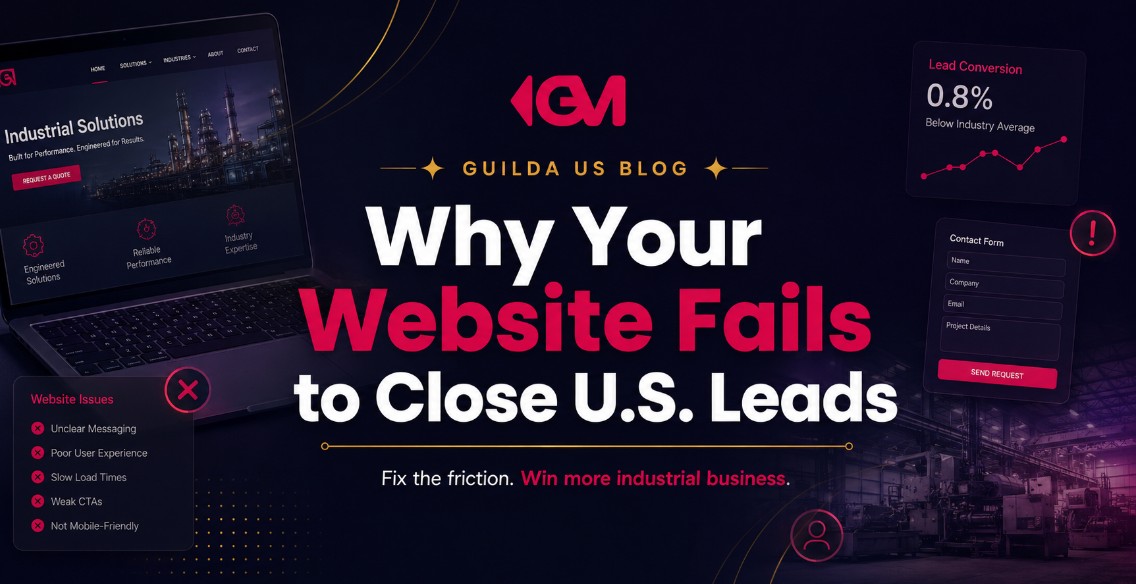
Industrial Lead Generation: Why Your Website Is Not Closing American Leads
If your company struggles with industrial lead generation in the United States, the problem may not be the market, your sales team, or even your ads. Many industrial websites attract the right visitors but fail to turn them into quote requests because they do not answer the questions American buyers need answered before starting a conversation.
A plant manager, procurement lead, operations director, contractor, distributor, or technical buyer rarely reaches out just because a company says it offers “high-quality solutions.” They want to know what you do, where you serve, what industries you understand, what capabilities you have, how the quote process works, and whether your company looks reliable enough to contact.
For industrial companies, the website is not just a digital brochure. It is often the first qualification step in the buyer’s mind. If that step creates confusion, hesitation, or doubt, the lead may never become a call, RFQ, or sales opportunity.
Why Industrial Lead Generation Breaks Before the Sales Call
Industrial lead generation breaks when your website creates a gap between interest and confidence. The visitor may need what you sell, but the site does not give them enough clarity to take the next step.
This usually happens when the website focuses on company history, generic claims, and broad service descriptions instead of practical buyer questions. U.S. buyers often compare multiple suppliers, manufacturers, contractors, or service providers before contacting anyone. If your competitor explains capabilities more clearly, your website may lose the lead before your sales team knows the opportunity existed.
An industrial website should reduce uncertainty before the buyer ever fills out a form.
The core issue is not only visibility. It is conversion readiness. Ranking on Google, running paid search, or driving traffic through campaigns will not fix a website that does not make the buyer feel informed, safe, and ready to request a quote.
The Website Mistakes That Cost Industrial Companies U.S. Leads
Most industrial websites do not fail because they look terrible. They fail because they are unclear at the exact moments where buyers need precision.
1. Your Homepage Does Not Explain What You Actually Do
Many industrial homepages use broad language like “innovative solutions,” “trusted partner,” or “quality service” without quickly explaining the company’s real offering. That may sound professional, but it slows down the buyer.
A stronger homepage should quickly clarify:
- What products, services, or industrial capabilities you provide
- Which industries or applications you support
- Where you operate or ship
- What makes your process, equipment, team, or specialization relevant
- What the visitor should do next
If a buyer has to search through five pages to understand whether you can help, the site is creating friction instead of momentum.
2. Your Service Pages Are Too Thin to Rank or Convert
A service page that only has a short paragraph and a contact button is usually not enough for industrial SEO or conversion. Buyers often search for specific capabilities, materials, applications, industries, tolerances, service areas, or project types.
A stronger service page should explain the offer in practical terms. For example, instead of only saying “custom fabrication,” the page should explain what type of fabrication, what materials, what industries, what project sizes, what process, and what information is needed for a quote.
This helps search engines understand the page, but more importantly, it helps the buyer decide whether the company is a fit.
3. The Website Does Not Build Enough Trust
In industrial markets, trust is not built with polished design alone. Buyers want evidence that the company can actually deliver.
Useful trust signals may include:
- Clear capabilities and technical details
- Industries served
- Facility, equipment, or process information
- Certifications, when applicable and accurate
- Project examples, without exaggerating results
- Reviews, testimonials, or references when available
- A real team, location, phone number, and company information
The goal is not to overwhelm the buyer. The goal is to remove doubt.
4. Your Calls to Action Are Too Generic
“Contact us” is not always enough. Industrial buyers often need a more specific next step, especially if they are comparing vendors or gathering information for an internal decision.
Better calls to action can include:
- Request a quote
- Send your project details
- Talk to a specialist
- Ask about capabilities
- Get help evaluating your project
The CTA should match the buyer’s intent. A visitor looking for a supplier may not want a newsletter, a vague form, or a “learn more” button. They need a clear path to start a business conversation.
5. Your RFQ Process Creates Too Much Friction
Some industrial websites make requesting a quote harder than it needs to be. Long forms, unclear requirements, broken upload fields, slow pages, or hidden contact information can stop a qualified buyer.
A better RFQ experience explains what the buyer should send and what happens after submission. For example: drawings, specs, quantities, timelines, application details, location, or preferred contact method.
When the process feels organized, the company feels more reliable.
Weak Website vs. Strong Industrial Lead Generation Website
| Weak Approach | Stronger Approach |
|---|---|
| Homepage says the company provides “quality industrial solutions.” | Homepage clearly explains capabilities, industries served, service areas, and next steps. |
| Service pages are short and generic. | Service pages answer technical, commercial, and buyer-intent questions. |
| Contact form asks for too much without explaining the process. | RFQ path is clear, simple, and aligned with how industrial buyers submit project details. |
| Trust signals are buried or missing. | Proof, capabilities, reviews, certifications, and company credibility are easy to find. |
| SEO targets broad terms only. | SEO targets specific services, industries, applications, and buyer search intent. |
The Common Misconception: “Industrial Sales Are Relationship-Based, So the Website Matters Less”
Relationships still matter in industrial sales. The mistake is assuming that relationships always start offline.
A buyer may hear your company name through a referral, trade show, distributor, supplier network, Google search, paid ad, LinkedIn post, or procurement list. But before reaching out, they often check the website to validate the company.
That means the website does not replace the sales relationship. It supports it. It helps the buyer feel that the conversation is worth starting.
A weak website can make a strong referral look uncertain. A strong website can make a cold visitor feel informed enough to become a real opportunity.
Industrial Lead Generation Checklist: What to Review on Your Website
Use this checklist to identify where your website may be losing qualified American leads.
- Clarity: Can a visitor understand what you do in the first few seconds?
- Fit: Do your pages explain which industries, applications, or project types you support?
- Proof: Do you show enough evidence to reduce buyer hesitation?
- Search intent: Do your pages match what buyers actually search for?
- RFQ path: Is it obvious how to request a quote or start a conversation?
- Mobile experience: Can someone review your capabilities and contact you easily from a phone?
- Page speed: Does the website load quickly enough to keep impatient buyers engaged?
- Follow-up alignment: Does the form collect the right information for your sales team to respond well?
If several of these points are weak, spending more on ads may only send more visitors into the same conversion problem.
What Industrial Companies Should Fix Before Spending More on Ads
Paid traffic can help industrial companies reach buyers faster, but ads cannot compensate for a website that lacks clarity. Before increasing ad spend, review the foundation.
Step 1: Define the Buyer’s Real Decision Criteria
Do not only ask, “What do we want to say?” Ask, “What does a serious buyer need to know before contacting us?”
This may include capabilities, capacity, location, turnaround expectations, industry experience, documentation, quality standards, communication process, or technical requirements.
Step 2: Build Pages Around Specific Services and Intent
A single general services page is often too broad. Industrial buyers search with specific problems and needs. Your site should have clear pages for the services, applications, or markets that matter most to your business.
Each page should answer what the service is, who it is for, what makes your company relevant, what information is needed, and how to start the process.
Step 3: Improve the RFQ and Contact Experience
Your website should make it easy for buyers to move from evaluation to action. That means clear buttons, visible phone numbers, simple forms, file upload options when needed, and a short explanation of what happens after the request.
The smoother the first step feels, the more likely a qualified visitor is to take it.
Step 4: Connect Website Leads to a Real Follow-Up Process
A website can generate a lead, but the business still needs a process to convert it. If RFQs sit too long, go to the wrong inbox, or lack context, the opportunity can cool down quickly.
For industrial companies, website strategy should connect with CRM, sales pipeline visibility, quote follow-up, and internal ownership. Lead generation is not just about the form submission. It is about what happens next.
When SEO, Website Conversion, and Sales Alignment Work Together
Industrial SEO helps the right buyers find your company. Website conversion helps those buyers understand why they should contact you. Sales alignment helps the company respond in a way that turns interest into a real opportunity.
The strongest industrial lead generation systems usually connect these three areas instead of treating them separately.
- SEO brings in buyers searching for specific capabilities.
- The website explains fit, value, trust, and next steps.
- The sales process turns the request into a qualified conversation.
This is where a strategic partner can help. Guilda Marketing works with businesses that need stronger visibility, better website performance, and clearer lead generation systems. For industrial and service-based companies, a more strategic approach to service business lead generation can help identify where leads are being lost and what needs to be fixed first.
FAQ: Industrial Websites and U.S. Lead Generation
Why is my industrial website getting visitors but not leads?
Your website may be attracting visitors without giving them enough clarity, trust, or motivation to request a quote. Review your service pages, CTAs, RFQ process, proof points, and mobile experience.
Does SEO matter for industrial companies?
Yes, when it is tied to real buyer intent. Industrial SEO should focus on specific services, capabilities, applications, locations, and technical needs instead of broad traffic that does not convert.
Should an industrial company use Google Ads before fixing the website?
Google Ads can be useful, but sending paid traffic to a weak website often increases wasted spend. Fix unclear pages, weak CTAs, slow load times, and RFQ friction before scaling campaigns.
What makes an industrial website more trustworthy?
Clear capabilities, real company information, technical details, relevant industries served, certifications when applicable, reviews, examples, and an easy contact process can all support trust.
Before You Invest More, Find the Real Bottleneck
If your industrial company is struggling to close American leads, do not assume the solution is simply more traffic. The real bottleneck may be the website experience between discovery and decision.
A stronger website helps buyers understand your capabilities, trust your company, and take the next step with less friction. It gives your SEO, paid traffic, referrals, and sales team a better foundation to work from.
If you want to understand where your website is losing leads, Guilda Marketing can help you evaluate your digital presence, improve your conversion path, and build a clearer strategy for qualified lead generation in the U.S. market. Start by exploring how Guilda supports service-based businesses and lead generation strategy.
Want to apply this to your business?
Tell us about your business and we will review your digital presence, growth stage and the biggest opportunities for your next marketing move.