Why Your Service Business Website Isn’t Getting Leads
Service Business Website Conversion: Why Visitors Don’t Become Leads Improving service business website conversion is rarely about adding more traffic. Many companies already receive qualified visitors from Google, referrals, social media, or paid advertising. The real challenge is convincing those visitors to take the next step. If your website creates uncertainty, friction, or confusion, potential […]
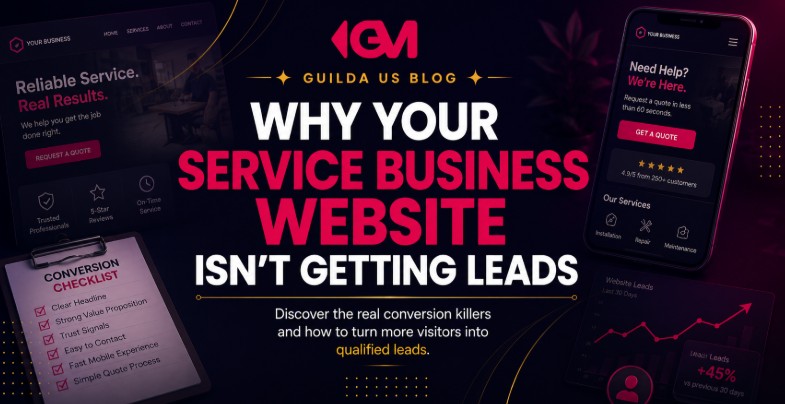
Service Business Website Conversion: Why Visitors Don’t Become Leads
Improving service business website conversion is rarely about adding more traffic. Many companies already receive qualified visitors from Google, referrals, social media, or paid advertising. The real challenge is convincing those visitors to take the next step. If your website creates uncertainty, friction, or confusion, potential customers simply continue searching until they find a competitor that feels easier to trust.
This is especially common among contractors, home service companies, professional service firms, healthcare providers, consultants, agencies, and local businesses that rely on quote requests rather than online purchases. Every missed inquiry represents lost revenue that additional advertising alone cannot solve.
The good news is that many conversion problems are easier to fix than most business owners expect. The first step is understanding how visitors make decisions once they land on your website.
Service Business Website Conversion Starts With Trust, Not Design
Many companies redesign their websites because they believe the appearance is outdated. While modern design helps, visitors rarely choose a provider based on aesthetics alone. They are looking for confidence.
Within seconds, potential customers are asking questions such as:
- Does this company solve my specific problem?
- Do they serve my location?
- Can I trust them?
- What makes them different?
- How difficult is it to contact them?
If the website fails to answer these questions quickly, visitors often leave without exploring further.
Common Reasons Service Business Website Conversion Stays Low
Generic Messaging
Many websites rely on broad statements such as “quality service” or “customer satisfaction.” These phrases rarely help customers compare providers because almost every competitor says the same thing.
Instead, explain:
- Who you serve
- Which problems you solve
- Your process
- Your service area
- What customers should expect after contacting you
Weak Calls to Action
If visitors must search for your phone number or wonder how to request a quote, conversions naturally decline.
Every important page should clearly guide users toward the next step.
Limited Trust Signals
Customers want evidence before making contact. Depending on your industry, useful trust signals may include:
- Customer reviews
- Project photos
- Before-and-after examples
- Professional certifications
- Years of experience
- Frequently asked questions
- Clear service guarantees when appropriate
For regulated industries such as healthcare or legal services, claims should remain accurate and carefully reviewed.
A Simple Conversion Framework
One practical way to evaluate your website is to review four stages of the visitor journey.
| Stage | Visitor Question | Website Goal |
|---|---|---|
| Attention | Am I in the right place? | Clearly explain your services. |
| Trust | Can I rely on this company? | Show reviews, experience, and proof. |
| Clarity | What happens next? | Explain your process and response time. |
| Action | How do I contact you? | Make forms, phone numbers, and buttons obvious. |
Diagnostic Checklist for Business Owners
Review your website and answer these questions honestly:
- Can visitors identify your primary service within five seconds?
- Are service areas clearly listed?
- Is every page mobile-friendly?
- Are customer reviews easy to find?
- Does every major page include a clear call to action?
- Can someone request a quote in under one minute?
- Do your pages explain why customers choose your business instead of another?
If several answers are “no,” your website may be losing qualified opportunities despite attracting relevant traffic.
A Realistic Business Example
Imagine an HVAC company serving multiple counties. The business receives steady traffic from Google Maps, referrals, and paid advertising, yet monthly quote requests remain inconsistent.
A website review reveals several issues:
- The homepage does not mention emergency service availability.
- Service areas are buried on a separate page.
- The quote form asks for unnecessary information.
- Customer testimonials are several years old.
- The phone number is difficult to find on mobile devices.
None of these issues affect search rankings directly, but together they create enough friction to reduce inquiries from otherwise qualified visitors.
Weak vs. Strong Website Conversion Strategy
| Weak Approach | Stronger Approach |
|---|---|
| One generic services page. | Dedicated pages for major services. |
| Hidden contact information. | Visible calls to action across every page. |
| Minimal proof of expertise. | Reviews, project examples, FAQs, and service details. |
| Focus only on increasing traffic. | Improve the entire customer decision journey. |
Frequently Asked Questions
Should I redesign my website if conversions are low?
Not necessarily. Many websites benefit more from improving messaging, navigation, trust signals, and calls to action than from a complete redesign.
Can paid advertising solve poor website conversion?
Paid campaigns may increase traffic, but visitors still need confidence before contacting your business. Improving conversion often helps advertising perform more efficiently.
How often should I review my website?
A quarterly review is a practical schedule for most small and medium-sized businesses. Businesses running active marketing campaigns may benefit from reviewing key pages more frequently.
Turn More Website Visitors Into Qualified Leads
A successful website does more than rank in search results. It answers questions, builds trust, removes friction, and guides visitors toward becoming customers. When these elements work together, improvements in SEO, paid traffic, and local visibility become significantly more valuable.
Guilda Marketing helps service-based businesses evaluate website performance, conversion opportunities, SEO strategy, and lead generation. Learn more about our approach for service companies at Service Provider Marketing Solutions, or explore additional resources on the Guilda Marketing homepage.
Want to apply this to your business?
Tell us about your business and we will review your digital presence, growth stage and the biggest opportunities for your next marketing move.