
Local SEO Audit Checklist for Small Businesses
Local SEO Audit Checklist: What Every Small Business Should Review Every Quarter A local SEO audit checklist is one of the simplest ways to identify why your business may not be attracting as many local customers as expected. Many companies assume they have a traffic problem when the real issue is that potential customers cannot […]
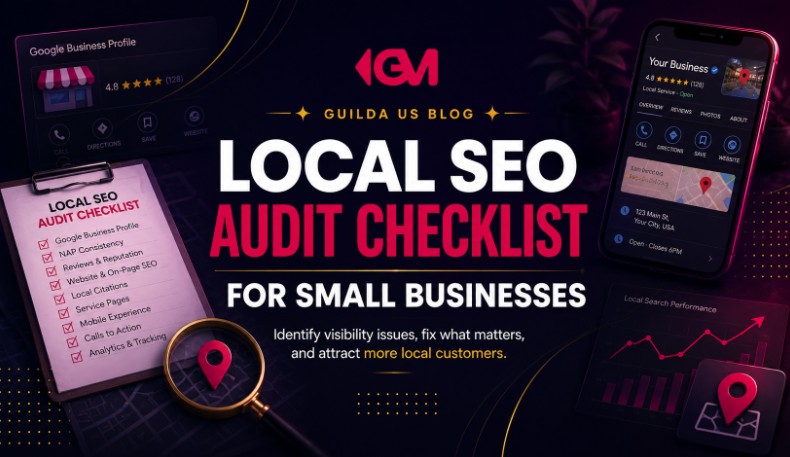
Local SEO Audit Checklist: What Every Small Business Should Review Every Quarter
A local SEO audit checklist is one of the simplest ways to identify why your business may not be attracting as many local customers as expected. Many companies assume they have a traffic problem when the real issue is that potential customers cannot easily find, trust, or contact them during the moments they are ready to buy.
Whether you operate a plumbing company, dental office, law firm, landscaping business, HVAC company, fitness studio, or another service-based business, small visibility issues often accumulate over time. An outdated Google Business Profile, inconsistent business information, weak service pages, or missing reviews can reduce your opportunities long before advertising becomes necessary.
Reviewing your local presence every quarter helps identify these problems before they begin affecting lead generation.
Why a Local SEO Audit Checklist Matters More Than Rankings Alone
Business owners often focus entirely on where they rank for a handful of keywords. Rankings matter, but they represent only one part of local search performance.
Customers also evaluate:
- Your reviews and recent customer feedback.
- The quality of your website.
- Whether your services are clearly explained.
- How quickly they can contact your business.
- Whether your business appears trustworthy compared to competitors.
Improving visibility without improving trust often produces disappointing results because visitors simply choose another company.
Your Quarterly Local SEO Audit Checklist
1. Review Your Google Business Profile
Check that your business information is accurate and complete:
- Business hours
- Primary and secondary categories
- Service areas
- Business description
- Phone number
- Website link
- Recent photos
- Products or services
Small inconsistencies can reduce customer confidence even if they do not directly affect rankings.
2. Evaluate Your Reviews
Instead of chasing review quantity alone, look for patterns.
- Are new reviews arriving consistently?
- Are negative reviews answered professionally?
- Do customers mention specific services?
- Do reviews describe real experiences?
Future customers often read reviews before they ever visit your website.
3. Inspect Your Service Pages
Many local businesses still rely on one generic “Services” page.
Instead, consider creating dedicated pages for major services and locations when appropriate. Visitors should immediately understand:
- What you do
- Who you help
- Where you provide services
- How to request a quote
4. Test Your Website Like a Customer
Open your website on your phone and ask yourself:
- Can I understand what the company does within five seconds?
- Is the phone number obvious?
- Is requesting a quote easy?
- Do pages load quickly?
- Do trust signals appear naturally?
Many businesses lose qualified leads because visitors become frustrated before making contact.
5. Verify Local Consistency
Ensure your business name, address, and phone number are consistent anywhere your company appears online. Consistency helps customers avoid confusion and strengthens your overall local presence.
Weak vs. Strong Local SEO Practices
| Weak Approach | Stronger Approach |
|---|---|
| Update the website only when something breaks. | Review website performance and customer experience every quarter. |
| One generic services page. | Dedicated pages for important services and markets. |
| Collect reviews occasionally. | Maintain an ongoing review request process. |
| Focus only on rankings. | Measure visibility, trust, and conversion together. |
A Practical Example
Imagine a remodeling contractor serving several nearby cities. The company appears in local searches but receives fewer quote requests than expected.
During a quarterly audit, they discover:
- Their Google Business Profile contains outdated project photos.
- Several location pages are missing.
- The contact form is difficult to complete on mobile devices.
- Competitors display far more recent customer reviews.
None of these problems require rebuilding the business. Together, however, they create friction that discourages potential customers from requesting estimates.
Questions Every Business Owner Should Ask
- Would I trust my own business based only on my online presence?
- Can customers easily understand what makes us different?
- Are we making it simple to request a quote?
- Have we updated our local listings within the last three months?
- Do our reviews reflect the quality of service we provide today?
When It Makes Sense to Get Professional Help
If your business depends on consistent local lead generation, a structured audit often reveals opportunities that are difficult to notice internally. The goal is not simply to improve rankings but to improve the complete path from search visibility to customer inquiry.
Guilda Marketing helps businesses evaluate local search performance, website trust signals, conversion opportunities, and long-term growth strategies. If your company serves local markets, learn more about our approach here:
Local Business Marketing Services
You can also explore additional marketing strategies and resources on the Guilda Marketing homepage.
Want to apply this to your business?
Tell us about your business and we will review your digital presence, growth stage and the biggest opportunities for your next marketing move.